
Monmouth County Superior Court Overview
The Superior Court of New Jersey is the trial court for Monmouth County. New Jersey runs one statewide judiciary, so the county does not create its own trial courts. Instead, the state groups court operations into regions called vicinages. Monmouth County is its own vicinage. The Monmouth Vicinage handles the bulk of serious legal matters filed in the county, from felony charges to large civil suits, divorce, and estate disputes.
Court business runs out of the Monmouth County Courthouse at 71 Monument Street, Freehold, NJ 07728. The main phone line is 732-358-8700, and public hours are Monday through Friday, 8:30 a.m. to 4:30 p.m. The official vicinage page lists Assignment Judge Marc C. Lemieux as the top judge for the region. Gurpreet Singh serves as the Trial Court Administrator and oversees daily court operations. You can confirm chambers, jury service, and office details on the New Jersey Courts Monmouth Vicinage page.
The courthouse sits in downtown Freehold, the county seat. Criminal, civil, family, and chancery proceedings all take place in the same building. If you have a Monmouth County case, the docket number on your papers tells you which division holds the file. For full case lookup steps, the court records page covers the state search portal in detail.
New Jersey Court Hierarchy
New Jersey courts run on a clear ladder. At the top is the state's highest court. Below it sits the intermediate appeals court, then the trial court where most cases begin. A specialized tax court and local municipal courts round out the system. The table below lays out each level and its job.
| Level | Court | Role |
|---|---|---|
| Highest appellate court | Supreme Court of New Jersey | Final state appellate court; sets court rules and runs judicial administration through the Chief Justice and the AOC. |
| Intermediate appellate court | Superior Court, Appellate Division | Hears appeals from the trial divisions, the Tax Court, and state agency decisions. |
| Main trial court | Superior Court of New Jersey | Trial court for major civil, criminal, family, chancery, and probate-related matters. |
| Specialized statewide court | Tax Court | State tax disputes and local property-tax appeals. |
| Local lower courts | Municipal Courts | Traffic, local ordinances, many disorderly persons cases, and many DUI/DWI matters. |
The state judiciary master plan describes this same structure: the Supreme Court, the Superior Court with its Appellate Division and trial courts, the Tax Court, the Municipal Courts, and the Administrative Office of the Courts. One key point about municipal courts is that towns fund and appoint their judges and staff. They are not on the state payroll, even though they are part of the state judicial system.
Superior Court Divisions in Monmouth County
The Superior Court splits its trial work into divisions. Each one handles a different kind of case. Knowing the division tells you where a Monmouth County court record lives and how open it is to the public. The three main trial divisions are Law, Chancery, and Family.
The Law Division handles two big tracks. The Civil Part hears money claims, personal injury suits, contract disputes, and other large civil matters. The Criminal Part hears indictable offenses, which are New Jersey's version of felonies. These are the most serious charges, brought by indictment or accusation after prosecutor review.
The Chancery Division covers equity cases. Its General Equity Part handles foreclosures, injunctions, and disputes that ask a court to order someone to act or stop acting, rather than just pay money. The Probate Part deals with contested wills, estate fights, and guardianship litigation. Routine estate filings start with the County Surrogate, but contested probate matters move into this part of Chancery. The probate records page explains that split in more depth.
The Family Division hears divorce, custody, parenting time, child support, domestic violence, juvenile, and adoption cases. Many family records are confidential by rule, especially anything involving children, restraining orders, or child welfare. Divorce dockets may show limited public data, but the documents inside often stay closed.
Monmouth County Courts and Offices
Several offices work alongside the Superior Court in Freehold. Each one holds a different slice of the records. The Surrogate handles probate intake. The County Clerk records deeds and county documents. The Prosecutor brings criminal charges. The Public Defender represents people who cannot afford a lawyer. The table below lists the main offices with the addresses and phone numbers found in official sources.
| Office | Address | Phone | Notes |
|---|---|---|---|
| Monmouth Superior Court / Monmouth Vicinage | 71 Monument Street, Freehold, NJ 07728 | 732-358-8700 | Main trial court for county Superior Court matters. |
| Monmouth County Surrogate | See the Surrogate office for the current address | See the Surrogate office | Probate intake, estates, and guardianships; contested matters go to Superior Court. |
| Monmouth County Clerk | 33 Mechanic Street, Freehold, NJ 07728 | 732-431-7324 | County records, recorded documents, OPRS, and election materials. |
| Monmouth County Prosecutor | 132 Jerseyville Avenue, Freehold, NJ 07728 | 732-431-7160 | County prosecutor for indictable criminal matters. |
| Office of the Public Defender, Monmouth Trial Region | 7 Broad Street, Freehold, NJ 07728 | 732-308-4320 | Represents eligible defendants who cannot afford counsel. |
| Municipal Courts | Addresses vary by town | Varies | Handle traffic, local ordinance, and many lower-level criminal matters. |
The Surrogate handles routine estate work, but the office's current street address should be confirmed on the Surrogate's own site before a visit. For court case copies, the Superior Court uses Judiciary Records Request Form CN 10200. The County Clerk runs the county's Open Public Records Search System for recorded documents, which is a different track from court dockets.
Note: Municipal court addresses change by town, so check the New Jersey Courts municipal court tools or call the town directly for the right location.
How a Case Moves Through the Courts
A New Jersey case can climb the ladder if a party appeals. Lower matters can start in Municipal Court, while serious matters begin in the Superior Court. From there an appeal goes up. The path is short but it matters, because each step changes where the record sits.
Case flow: Municipal Court › Superior Court › Appellate Division › Supreme Court of New Jersey
On the criminal side, a serious matter begins with an arrest or complaint, then prosecutor review, then bail or detention steps. If the grand jury indicts, the case moves into the Superior Court Criminal Part. Municipal Courts handle the smaller complaints, traffic tickets, and many first-appearance steps. Larger civil claims, foreclosure, family dissolution, and probate disputes all begin in the Superior Court. Appeals from trial decisions go to the Appellate Division, and the Supreme Court may review the case after that, either by grant or in limited categories as of right.
Superior Court vs. Municipal Court
People often mix up the two main court levels in New Jersey. The Municipal Court is local and handles smaller matters. The Superior Court is the main trial court for serious cases. The comparison below shows how the two differ in the kinds of cases they hear.
| Superior Court | Municipal Court | |
|---|---|---|
| Criminal cases | Indictable offenses, the most serious charges | Disorderly persons, local criminal complaints, many DUI/DWI |
| Traffic | Not the usual venue | Traffic tickets and motor vehicle matters |
| Civil cases | Larger civil suits, foreclosure, general equity | Local ordinance violations |
| Family and probate | Divorce, custody, support, contested estates | Not handled here |
| Funding | State judiciary | Funded and staffed by the town |
So if you have a speeding ticket or a local ordinance summons, your case is in Municipal Court. If you face a felony-level charge, a divorce, a foreclosure, or a will fight, your case is in the Superior Court. For traffic matters in detail, see the court dockets page, which explains how dockets differ from full case files.
Federal District Court for New Jersey
The federal court system is separate from the county Superior Court. Monmouth County sits inside the federal District of New Jersey. Federal civil, criminal, and bankruptcy cases do not run through state portals. They run through PACER and the CM/ECF filing system instead. Federal criminal cases cover federal offenses prosecuted by the U.S. Attorney's Office. Federal civil cases cover constitutional claims, civil rights, federal statutes, and diversity matters.
The trial-level federal court is the U.S. District Court for the District of New Jersey. Its site explains the court's locations and procedures.
You can review the trial court's main page at the U.S. District Court for the District of New Jersey before searching for a federal case.
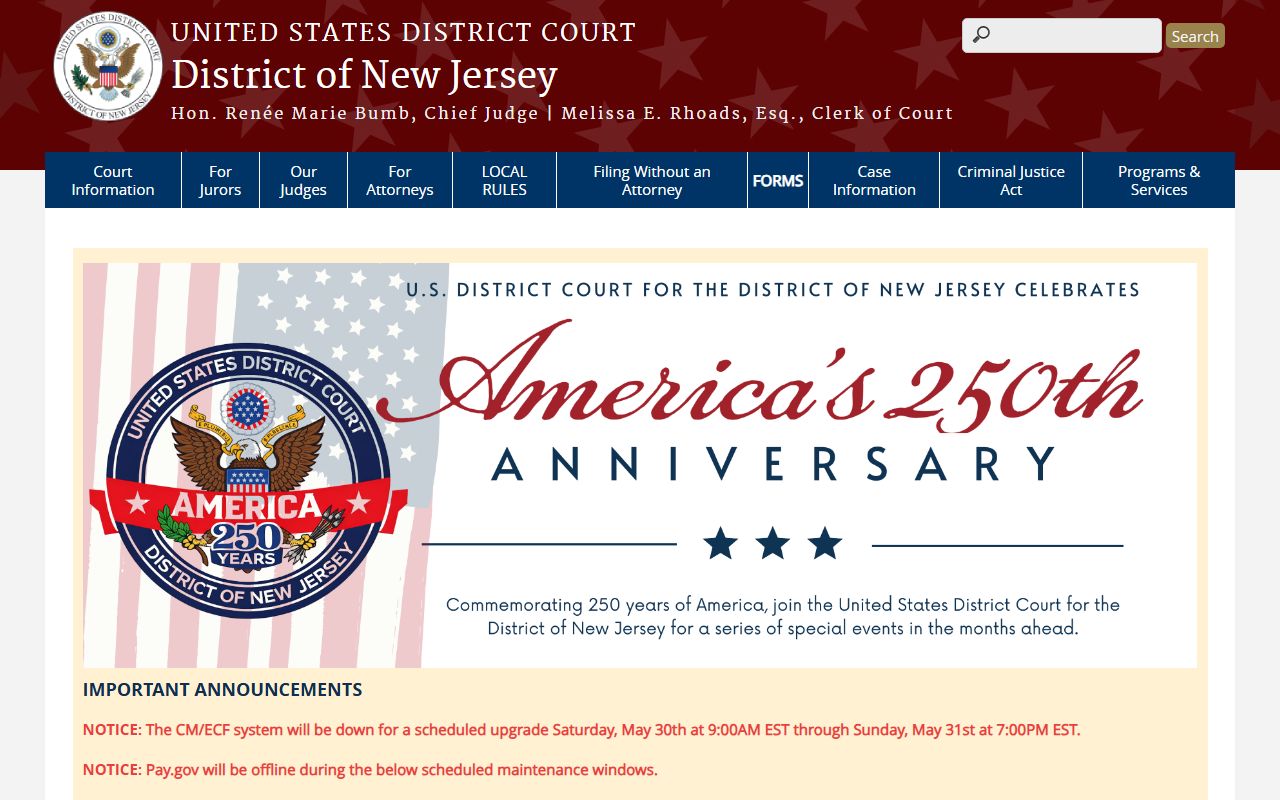
That court is where most federal lawsuits and federal criminal cases tied to Monmouth County are filed. Lawyers and registered users file documents through the court's electronic docket system.
The filing and docket system for the district is CM/ECF. Attorneys and approved users log in to file and view documents there.
The login and access portal is the District of New Jersey CM/ECF system, shown below.
CM/ECF is mainly for registered filers. The public usually reaches the same dockets through PACER, which serves as the national gateway to federal case records.
To search federal dockets and pull documents, the public uses PACER. It requires registration and charges fees under federal judiciary rules, with waivers for some users.
You can register and read the fee rules on the PACER site, pictured here.
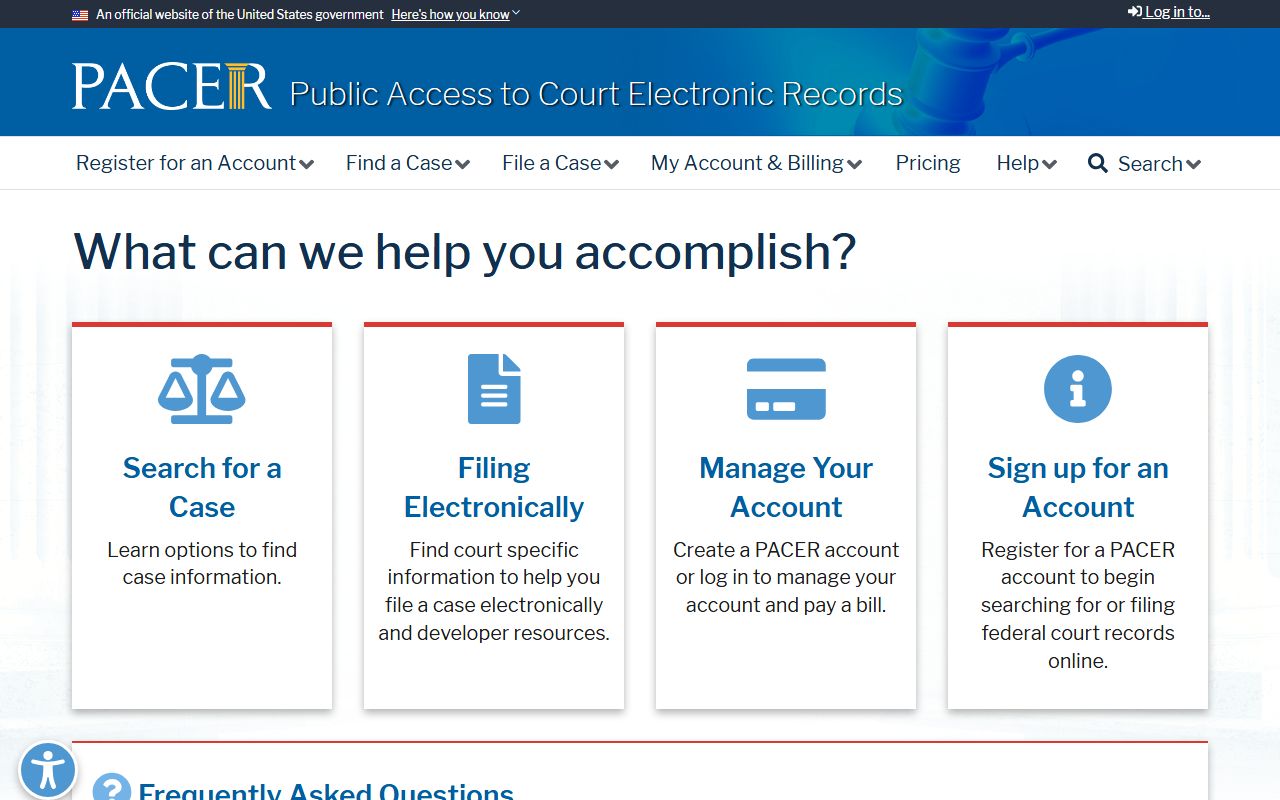
PACER charges per page for most searches and documents, though some users qualify for fee waivers or fall under quarterly thresholds. Certified federal records still come from the court itself.
Bankruptcy is its own federal track. The District of New Jersey has a dedicated bankruptcy court for Chapter 7, 11, 13, and related filings.
For bankruptcy matters, the records sit with the U.S. Bankruptcy Court for the District of New Jersey, shown below.
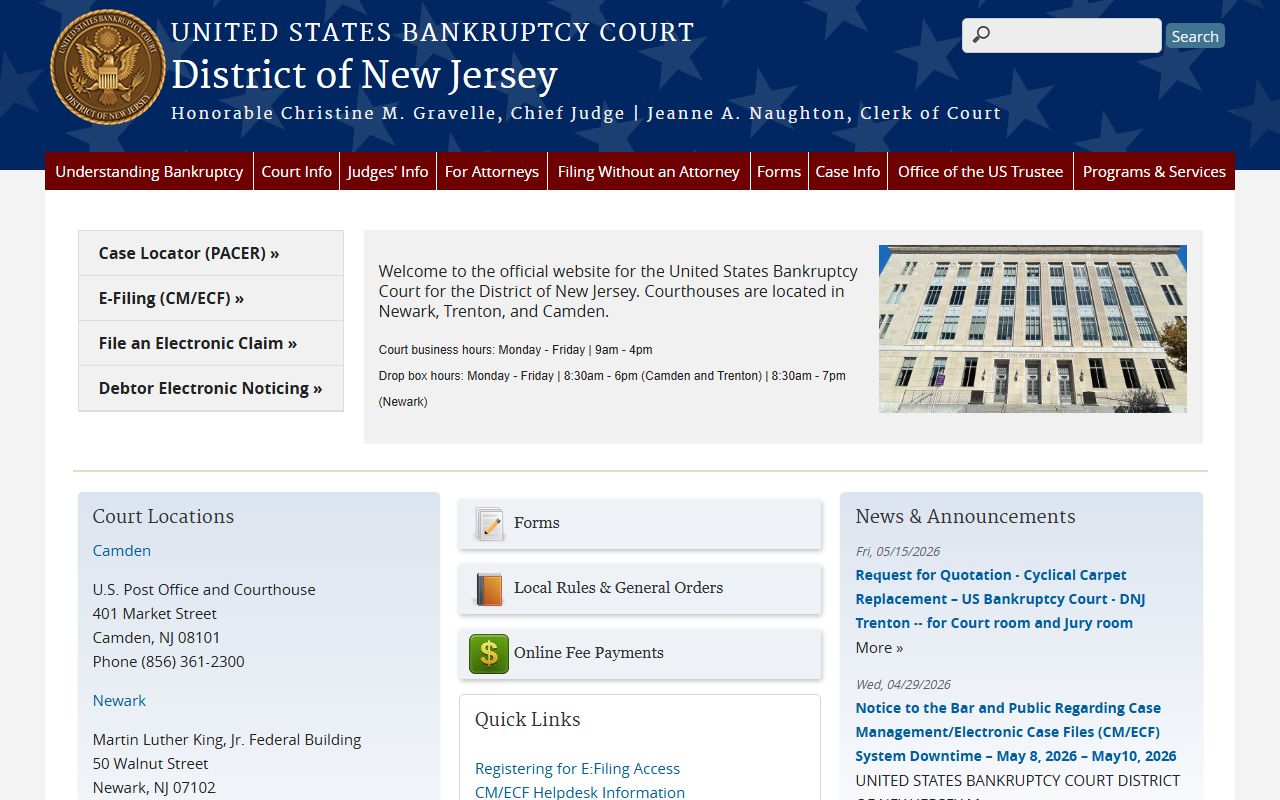
Bankruptcy dockets and claims are searchable through PACER as well. Appeals from these federal trial-level decisions move up to the regional federal appeals court.
Federal appeals from New Jersey go to the Third Circuit. This court reviews decisions from the district and bankruptcy courts in the region.
The appeals court is the U.S. Court of Appeals for the Third Circuit, whose site appears below.
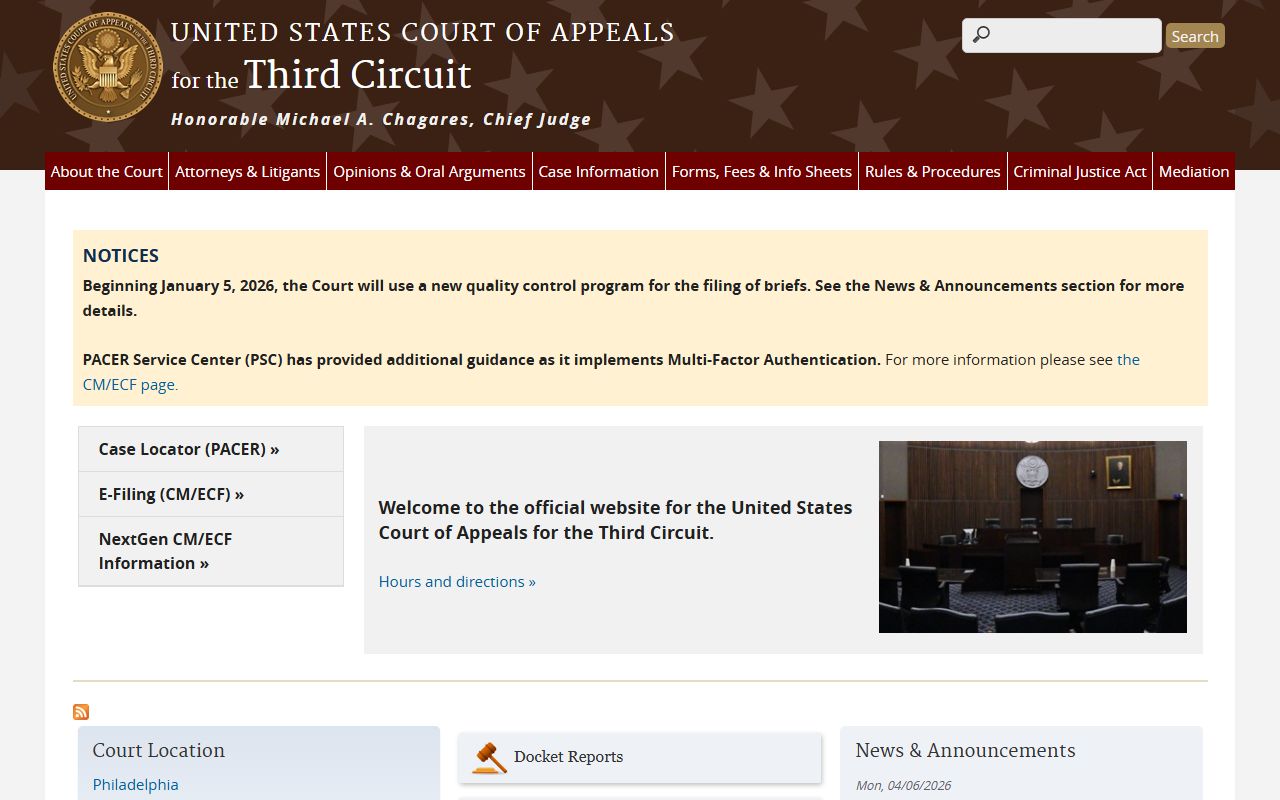
The Third Circuit hears federal appeals for New Jersey, Pennsylvania, Delaware, and the U.S. Virgin Islands. Keep in mind these federal courts are wholly separate from the Monmouth County Superior Court, so a state case and a federal case use different search systems.
The Surrogate and Probate Role
The Monmouth County Surrogate plays a special role in the court structure. It is an elected county office, but it works hand in hand with the Superior Court. The Surrogate accepts probate filings, opens estates, and handles guardianship intake. For most families, the Surrogate is the first stop after a death when a will needs to be proven.
When a probate matter is contested, it does not stay with the Surrogate. A will challenge, a caveat, or a guardianship fight moves into the Superior Court Chancery Division, Probate Part. That is where a judge resolves the dispute. So the Surrogate handles the routine intake, and the Superior Court handles the litigation. The probate records page walks through that handoff and how to find estate files.
Note: The Surrogate handles estate intake, but contested wills and guardianship disputes are heard by a Superior Court judge in the Chancery Division.